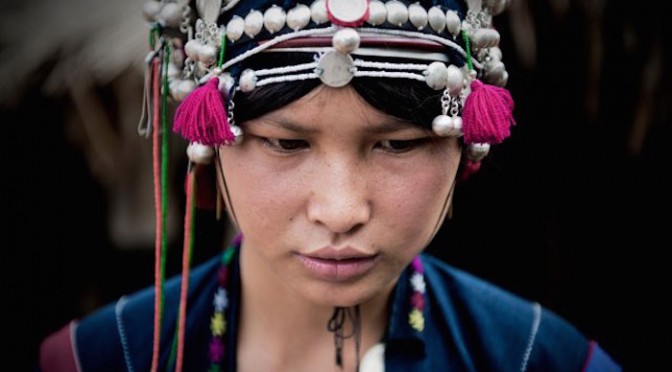
The Akha tribe lives in the North of Tailand. Up to now, the people of Akha have preserved their unique ethnic culture and faith. They are now feeling great pressure from Christian missionaires. The people of Akha are constantly under the threat of disappearance. Mathew McDaniel lives with them and tries to help them. He also keeps the members of WCER informed about the news and events affecting the Akha people through the internet. The information we get demonstrates the actual tragedy created by the disturbance of a living traditional culture. Here is one of his latest reports. Continue reading The Akha People a report by Matthew McDaniel→
There are problematic aspects of the current position of Shinto in Japanese life. My Shinto-priest friend Mitsugi Ochiai educated me on a number of these matters, and much of what I say here is based on our conversations.
One year after we gathered in Vilnius, we are now together in Telsiai. One year of experience, one year of searching, of comparing ideas, one year of – sometimes heavy – discussions, one year of friendship, one year of efforts to see how we could collaborate. Some persons have worked very hard to realise a dream that many of us have. Continue reading A speech by Koenraad Logghe given at the 2nd Conference of WCER, August 11, 1999→
Paganism or the rediscovery of Identity by Jormundur Ingi, Allherjarsgodi of the Asatru Felagidh, Iceland presented at Pagan Conference in Antverpen, March 7th, 1999
Dear friends and brothers and sisters of the Ukrainian Native Faith, Dear Ukrainians, confessors of all different confessions, we are on the threshold of the Third millennium. Nowadays humanity begins to realize the importance of the renewal of its spiritual values which have been lost during the millennia. Continue reading Ukrainian Declaration→
The old tradition is not a secret order, she had no hierarchy, no leaders with extravagant titles, as in many modern Asatru organizations in Norway and other countries. We also do not need the clergy, ptomu that it is contrary to our traditions. The old tradition is not a re-creation as claimed by many, it has survived, thanks to popular belief, traditions and myths, having existed for thousands of years without the religious leaders and hierarchy.
Raza Festival, held at the summer solstice in 1998 in Vilnius, the meeting witnessed a large group of representatives of the pre-Christian or pagan faiths of Europe, USA and India. Such groups exist to Svema the world, including most of Europe. Their isolation had come to an end, and nastoalo time to exchange ideas and to overcome common obstacles. Continue reading The first congress WCER Vilnius, report by Jonas Trinkunas, Lithuania, June 1998→
The World Pagan Congress was held 20-25 June 1998 in Lithuania. Lithuania was selected to host the Congress because it was the last Pagan country in Europe. Although the country was officially Christianized in 1387-1410, the last Pagan temple in its capital city Vilnius was closed around 1790. Continue reading The 1998 WCER Congress, Report by Audrius Dundzila→