Tag Archives: ECER

The Athens Declaration of the European Congress of Ethnic Religions (2025)

«The Contribution of Ethnic Religions to the formation of European Identity»

European ethnic traditions and religions have largely shaped the character and worldview of Europeans and are the foundation of European culture, which encompasses almost everything, from folk customs and science to art and philosophy.

These traditions are not simply remnants of the past, but a living, powerful, and historically validated framework that has positively and continuously influenced the development of European societies throughout history. At the same time, it is an opportunity for many people to awaken and discover their ethnical cultural uniqueness.

Ethnic religious traditions are more than spiritual belief systems; they serve as a framework for social cohesion, cultural continuity, and collective memory. Through rituals, symbols, and narratives, they create bonds within communities, fostering a sense of belonging and shared identity.

Ethnic religions are the driving force behind the creation of ethnicities, which may speak different languages but describe and interpret the Cosmos with a similar worldview. European ethnic religions are one of the main forces that created our identity and are responsible for the existence and preservation of a European common ethnicity.

Ethnic religions and traditions are guardians, preservers and weavers of intangible cultural heritage, agents of spiritual renewal in modern Europe, and act as a vital catalyst for social cohesion. As they are cultivated and strengthened, they simultaneously revitalize communities by promoting growth in areas such as science, education, and civic engagement.

As historic sources document, after the often-forced replacement of the ethnic religions by monotheisms, several countries have experienced a decline in ethical and spiritual integrity, evolving into systems marked by pervasive corruption and weakened moral foundations. In these societies appearances and material success are often valued more highly than sincerity, honor, and the deeper principles that once guided traditional way of life that stresses authenticity. A revival of ethnic religions could ensure the restoration of this character traditionally embedded in culture and give European spirituality a harmonious, healing and sustainable effect, as the renaissance has proven the change that can occur when traditions emerge in the forefront.

Given Europe’s historical background and in light of the significant changes that will determine its future, it is now more crucial than ever to protect, study, and promote these religions and traditions institutionally, going beyond mere preservation.

In this way, we can draw on their inherent wisdom to address the challenges of our time and ensure a future for Europe that is both rooted in its heritage and dynamics.

WHY DO WE DEFEND ETHNIC RELIGIONS AND TRADITIONS?

-Because they offer each people a unique vision for understanding themselves and interacting with the world.
-Because they integrate humans into the cyclical time of constant re-creation without the fear of death.
-Because they create religious pluralism that is reflected in the world of the Gods and Goddesses as an ethnosphere.
-Because they create the historical continuum of Tradition through which the social condition of Identity is freely expressed, thus allowing the same essence to take on infinite valid forms.
-Because they restore meaning to life through behavioral patterns that strengthen collective life and cultural creation for the benefit of the community.
-Because they open up different ways of approaching the numinous in each different culture, without demanding any kind of ownership for themselves, but respect and accept as equally valid the indigenous narratives that developed effortlessly by interpreting nature with logic.
-Because they are the ones that demand the greatest honor for mortal beings, to approach and revere the sacred, not through self-punishment but through the spiritual elevation provided by mysteries and rituals.
-Because they are the creative force behind the cultural creation known as ethnos. Without them, the ethnos would be reduced just to a random group of atomic individuals, without common content, by the monocracy of globalization and to mere consumers or interchangeable labour force.
-Because they place responsibility, a fundamental element of any justice system, in the place of forgiveness.

From Athens, on October 4, 2025, representatives of 16 organisations from 14 countries are joining forces to declare our respect for traditional European religions.

We recognize the value of our ancestors, as well as the worldview, and traditions they have passed down to us. Our culture and spirituality are inextricably linked to our religions and traditions and must be protected.

We appeal to all European governments and European Union institutions to recognize our religions and grant them the same respect and privileges enjoyed by other recognised religions in European legal systems.

Therefore, we request the following:

1) Full recognition of the ethnic religions and traditions of Europe, acknowledgment of their historical and cultural role in the formation of the ethnos, and establishment of a special legislative framework for specific issues such as the performance of marriages and naming ceremonies with full legal validity.
2) Institutional participation of the ethnic religion’s leadership in official state events, inaugurations and wherever else required.
3) Establishment of a legal framework for the protection of all rituals, customs and the days of celebrations of the ethnic religion associated with major life events: from birth and marriage to end-of-life care (care for the sick/elderly and burial).
4) Establishment of a legislative framework for the unhindered operation of religious organizations (tax breaks, state funding, direct sanctions on individuals or other religious organizations that oppose, slander or defame or turn in any way against the representatives of the ethnic religion).
5) Legislative initiative for the designation of the sacred temples, epiphanic places and/or groves of the ethnic religions as strictly protected religious sites—rather than merely cultural or archaeological sites—including their surrounding environment.
6) Securing the right of ethnic religions to access and use the sacred spaces that fall under state jurisdiction for the performance of religious rites and other activities, with absolute respect and unwavering adherence to regulations.
7) Respect and recognition of sacred languages and traditions as fundamental elements of ethnic identity.
8) Adopt best practices from other nations on recognition and protection.
9) Review of the content of educational textbooks and programs at all levels, to ensure appropriate respect and proper representation of ethnic religions.
10) Ensuring the unhindered right to abstain from religious education classes, without social stigmatization or any obstacle for those who do not wish to attend.
11) Recognition of the sanctity of Nature and adoption of measures to prevent its systematic and deliberate exploitation, including the preservation of sacred sites, forests and venerable heritage trees from cutting or disturbance.
12) Clarify the meaning of traditionality which is embodied and represented only by ethnic religions which are indigenous in their respective countries.
13) As far as to the national law extends, the traditions of ethnic religions must be recognized as part of the local traditional culture.

Member organizations (represented by):

Ύπατο Συμβούλιο των Ελλήνων Εθνικών, Hellas (Κώστας Κεχαγιάς, Γιάννης Μπαντέκας, Ελένη Πετρή, Ελένη Ξάνθη, Αναστάσιος Καρακώστας, Σοφία Βλαχούλη, Αιμιλία Ματθέ, Παναγιώτης Κακκάβας, Νίκη Ρήγα, Δημήτριος Μητσάτσος, Καλλιστώ Τσολομύτη, Χρήστος Γκατζόγλου, Αριστοδίκη Κυριακή Λαμπίρη, Αμφικτύων Ευστάθιος Κεφάλας, Παναγιώτα Διοτίμα Παπουτσή, Δημήτριος Τακτικός, Σοφία Σουλιώτη, Χρήστος Χρήστου, Ιωάννης Κοσμόγιαννης, Πέτρος Νικολάου, Δημήτριος Παππάς, Βασίλειος Κατσιούπας)
Associazione Tradizionale Pietas, Italy (Giuseppe Barbera, Mattia Zaniboni, Filippo Cavatore, Lorenzo Facciuoli, Anselmo Perrotta, Yuri Gavriliouk)
Groupe Druidique des Gaules, France (Jean Lionel Mamquat, Jean MarcDuvette, ValérieParrat, Alexandra di Genova di Salle)
Latvijas Dievturu sadraudze, Latvia (Uģis Nastevičs, Eva Mārtuža, Andrejs Broks, Daina Kazāka)
Об`єднання рідновірів України, Ukraine (Лозко Галина Сергіївна, Дериведмідь Володимир Дмитрович)
Senovės baltų religinė bendrija Romuva, Lithuania (Ugnė Trinkūnaitė, Benas Barzdžius)
Sjamanistisk Forbund, Norway (Kyrre Gram Franck, Gro Hilseth Adriansdatter)
Slované, Czech Republic (Giuseppe Maiello)
Werkgroep Traditie Vzw, Belgium (KoenraadLogghe, Thomas Slembrouck, Brenda Lioris, Jorres De Vriendt)
Związek Wyznaniowy Rodzima Wiara, Poland (Judyta Król, Piotr Brzeziński)
Ύπατο Συμβούλιο των Ελλήνων Εθνικών Κύπρου, Cyprus (Γιώργος Κωνσταντίνου, Ευδοκία Ιωάννου)

Observer organizations (represented by):

Forn Sed Norge, Norway (Ingvild Linéa Bråthen, Audun Mehl)
Forn Siðr, Denmark (Camilla Winther Bang, Monika Ylfa Steensdatter)
Kredenn Geltiek, France (Erwan Le Bars)
Mythology Corner, United States (Ghanasyam Akella)
Rodný kruh, Slovak republic, Kokava nad Rimavicou (Rodan Švický, Miroslav Žiarislav Švický, Rastislav Štefanák)
Θύρσος – Οίκος Ελλήνων Εθνικών, Hellas (Ευάγγελος Κιούσης, Γιώργος Δημόπουλος)

This Declaration is also supported by individuals:

Nephelie Skarlatos, Hellas, scholar
Stian Sundell Torjussen, Associate Professor, University of Inland Norway, Hamar
Rasa Pranskevičiūtė-Amoson, Associate Professor, Vilnius University, Lithuania
Φωτίου Ευγενία, Associate Professor, University of Crete, Hellas
Σμαροπούλου Μαριλένα, Hellas
Paul Zurkinden, Switzerland
Antoine Teyssier, France
Ευθύμιος Κανιώρης, Hellas

The European Congress of Ethnic Religions 2023 in Latvia

2023/06/29–2023/07/02

The purpose of the European Congress of Ethnic Religions (ECER) is to serve as an international body that will assist Ethnic Religious groups in various countries and will oppose discrimination against such groups. By Ethnic Religion, we mean religion, spirituality, and cosmology that is firmly grounded in a particular people’s traditions. In our view, this does not include modern occult or ariosophic theories/ideologies, nor syncretic neo-religions.

The first European Congress of Ethnic Religions took place in Vilnius (Lithuania) in 1998, the 10th Congress was held in Rīga-Jūrmala-Sigulda (Latvia) in 2007. We are privileged to announce that the 18th Congress returns to Latvia. We are looking forward to see you in Rīga and Lokstene during the 4 days of the Congress (June 29 – July 2, 2023) in Latvia.

Please, feel free to follow our news and updates on social media sites — @Dievturi —, and use the hashtag #ECER2023 when publishing or looking for the information about the Congress.

More information: https://sites.google.com/view/ecer2023/

Here is the application form link: https://forms.gle/RZtEpAaFtJkj8Aqw5
The ECER mourns the passing of Vlassis G. Rassias

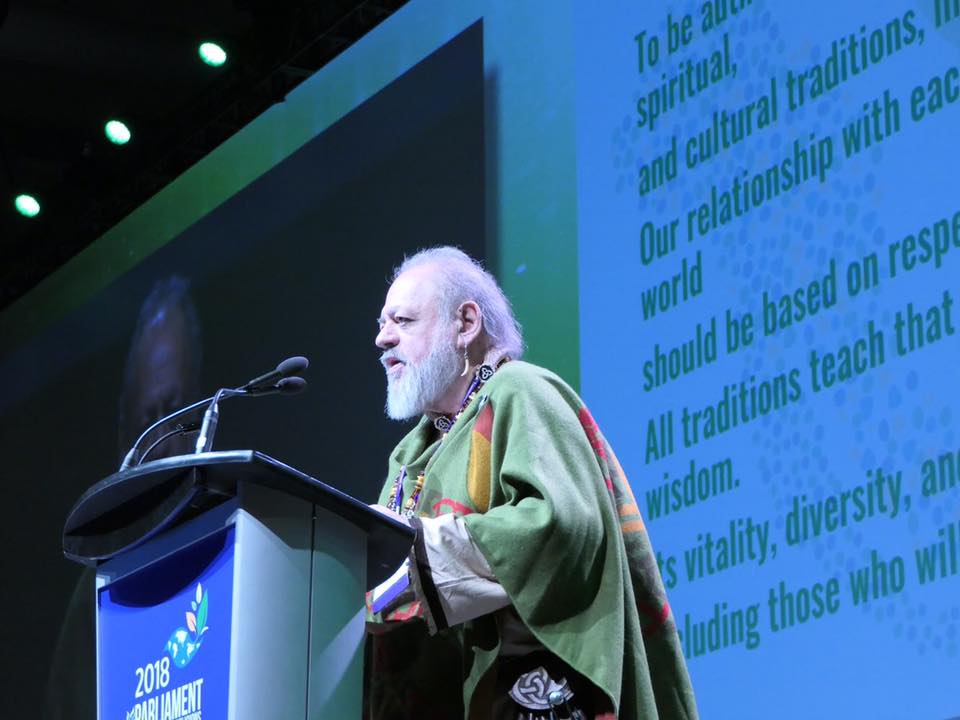
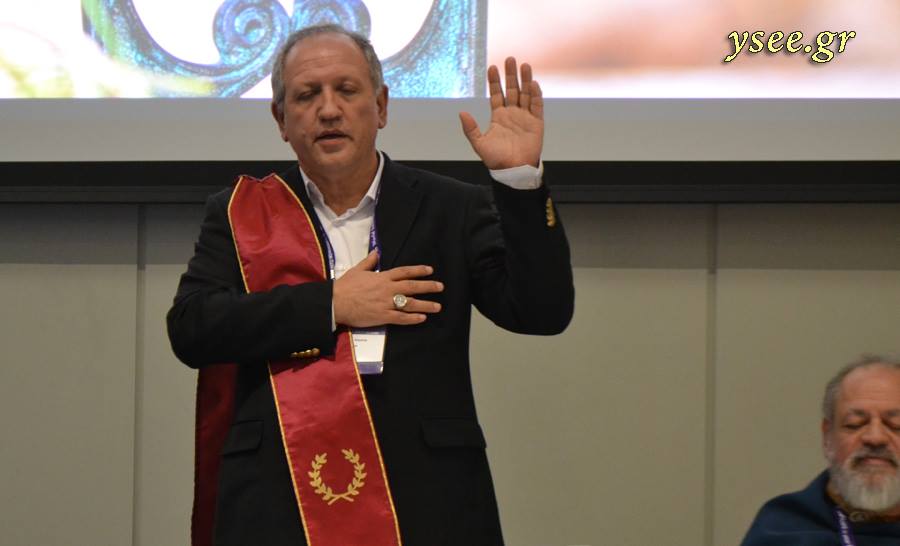
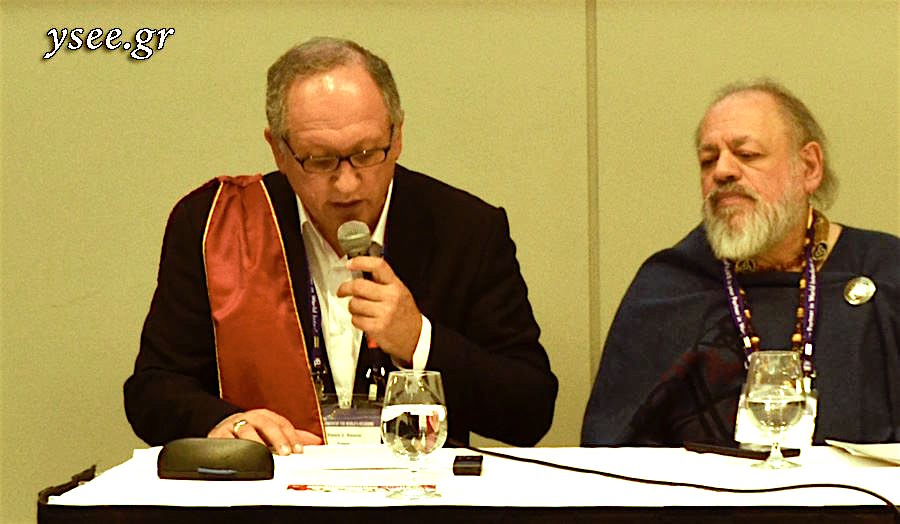
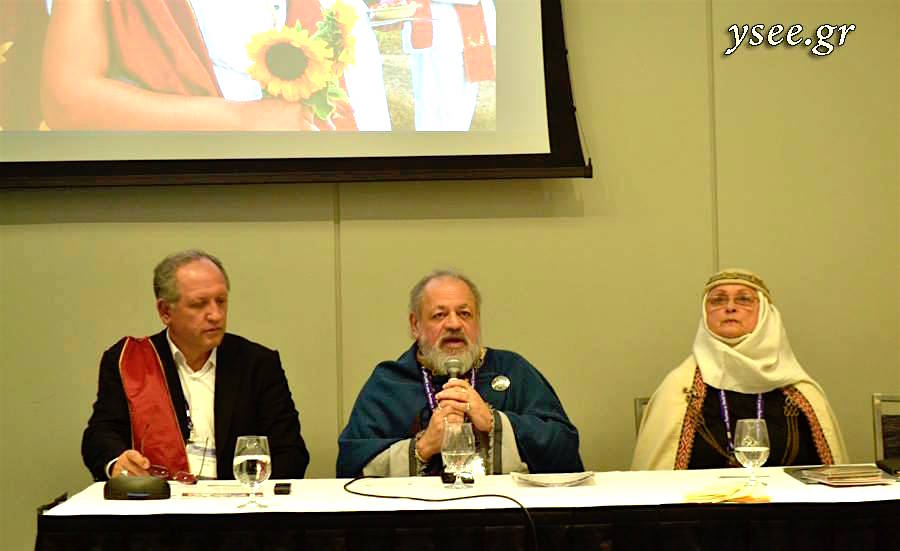
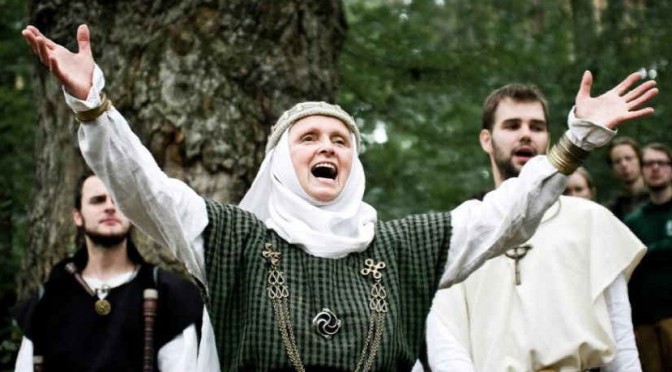
The ECER mourns the passing of Vlassis G. Rassias, one of our founders and a member of our Board of Directors. Vlassis, the leader of the Supreme Council of Ethnic Hellenes (YSEE), was renowned as an author, speaker, and activist for the restoration of the Hellenic ancestral religion, as well as an advocate for other indigenous, ethnic religions throughout Europe. I grieve, personally, the loss of a dear friend and colleague, someone whom I deeply appreciated, respected and admired throughout the decade we worked together. This is a photo of Vlassis addressing the Parliament of the World’s Religions in Toronto, Canada last November, as part of a panel discussion that he, Inija Trinkuniene of Lithuania, and I presented there. On behalf of the ECER, I send our deep condolences to his family and community — we are all so much richer for having had Vlassis as part of our lives.

Andras Corban-Arthen
President, European Congress of Ethnic Religions

ECER stand in solidarity to Romuva ethnic religion

The statement of Andras Corban-Arthen 
President, of European Congress of Ethnic Religions

As president of the European Congress of Ethnic Religions (ECER), I would like to condemn, in the strongest possible terms, the unwillingness of the Lithuanian Parliament (Seimas) to recognize Romuva as an official religion in Lithuania. Romuva has fulfilled all the requirements to qualify for such a designation — it is a rapidly growing religion, whose members have creditably represented their homeland all over the world. Moreover, Romuva stands as one of the few remaining examples of the survival of European indigenous religions and cultures.

Continue reading ECER stand in solidarity to Romuva ethnic religion

The Review of Saturnia Tellus for the ECER Congress in Rome 2018

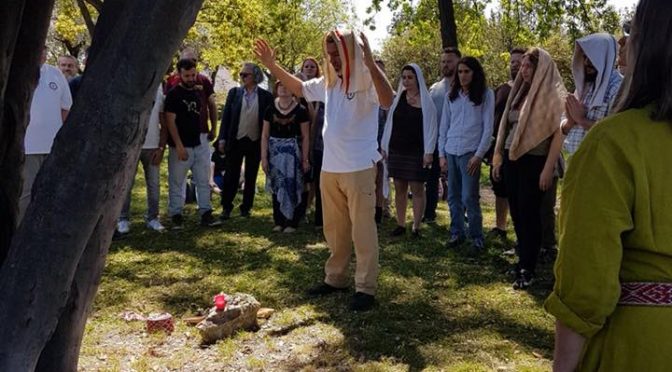
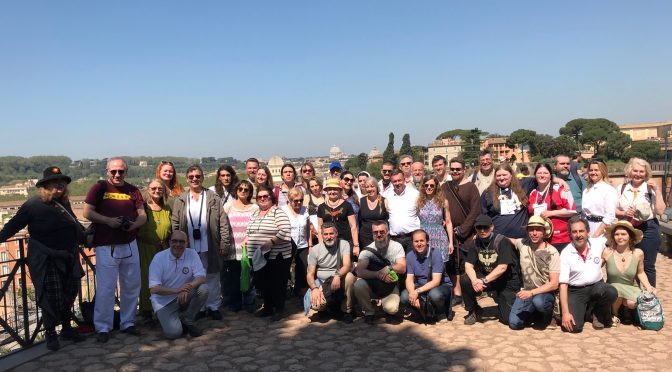
A great four-day event, with the participation of delegations from fifteen European countries and a representation from the US, culminated in an intense and luminous common ritual on the sacred hill of the Palatine on the 2771st anniversary of Rome foundation, the “Dies Natali”. So it was the sixteenth Congress of the ECER – European Congress of Ethnic Religions, organized by the Movimento Tradizionale Romano on the theme “The pagan rituals and their sources” (19 – 22 April 2018), concluded in Rome with great success, thanks to the synergy of prestigious doctrinal and scientific contributions and an impeccable organization. Continue reading The Review of Saturnia Tellus for the ECER Congress in Rome 2018

THE PRESENTATION OF YSEE AT THE EUROPEAN CONGRESS OF ETHNIC RELIGIONS (ECER) «2018»

The presentation of the Supreme Council of Ethnikoi Hellenes (YSEE) on the first day of the 17th European Congress of Ethnic Religions (ECER) at Rome (April the 19th «2018»).

Η παρουσίαση του Υπάτου Συμβουλίου των Ελλήνων Εθνικών (ΥΣΕΕ) κατά την πρώτη ημέρα του 17ου Ευρωπαϊκού Συνεδρίου Εθνικών Θρησκειών (ECER) στην Ρώμη (19 Απριλίου «2018»).

Music: Send for the Horses Kevin MacLeod (incompetech.com) Licensed under Creative Commons: By Attribution 3.0 License http://creativecommons.org/licenses/b…

The European Ethnic Religions Conference in 2010 (Oaks 7)

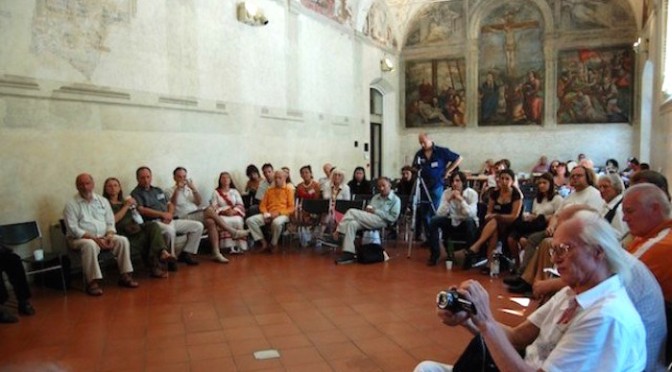
From 25 to 29 August, the city of Bologna in Italy hosted the European Congress of Ethnic religions. Referred to as ancient pre-Christian (pagan) or native (indigenous) religions. The first conference was held in Vilnius in 1998, and the for runner of this inter-religious union was named the “World Congress of Ethnic Religions. ” During the past 13-years this religious movement has been growing, and representatives meet regularly in other European countries. This year it was in Bologna with about 100 delegates from Denmark, Norway, Germany, France, Greece, Lithuania, Latvia, Portugal, Czech Republic, Poland, Ukraine and Russia. Continue reading The European Ethnic Religions Conference in 2010 (Oaks 7)

Bologne ECER Declaration-2, 29th of August, 2010

Bologne ECER Declaration-2,  29th of August, 2010

The WCER delegates who gathered in Bologna, Italy (2010.08. 26-29) at our yearly conference came to the decision that from now on our name should be changed to European Congress of Ethnic Religions. The word “World” should be “European” instead. Why did we decide to focus only on Europe? Thirteen years have passed since the creation of the Congress in 1998 in Vilnius, Lithuania. Every year, conferences were organized in various European countries and it turned out that that the Congress actually unites only people of European indigenous traditions, even though the congress is open to all other traditions. Continue reading Bologne ECER Declaration-2, 29th of August, 2010